

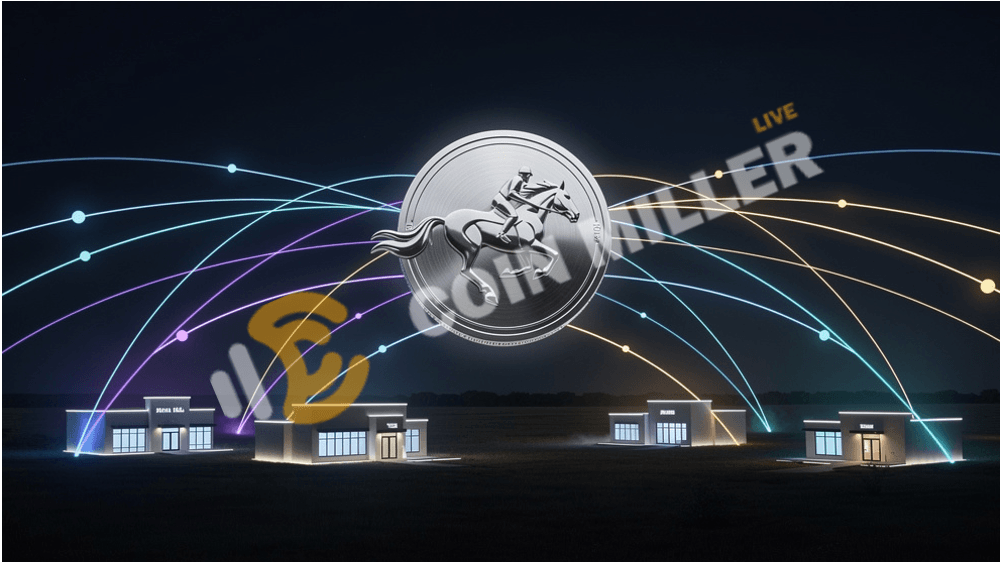
Fiserv has moved its digital asset platform into production, and the first live use case is Roughrider Coin, an interbank payment token overseen by the Bank of North Dakota. The deployment gives banks and credit unions in North Dakota a dollar settlement route on Solana. More than 90 institutions are taking part in the rollout, according to Fiserv. That number describes participation, not how much money is actually moving. Roughrider volume remains undisclosed.
A settlement option inside familiar bank systems
Participating institutions reach Roughrider through Commercial Center, Fiserv’s online banking system already used for traditional interbank transfers. BND says initiation, approval, and settlement run through the same operational channels banks use for ACH and wires. Staff can work through systems they already know. For community banks, the immediate change is another settlement option embedded in existing workflows, not a separate app or a new treasury desk.
Permissioned token on a public chain
Roughrider is a permissioned asset on Solana’s public blockchain. Participation is voluntary and limited to financial institutions. Token transfers run on Solana under institutional access controls. VersaBank USA National Association issues Roughrider, Fiserv operates the platform, and BND provides governance oversight. Fiserv assigns VersaBank responsibility for minting, burning, custody, and reserve management. BND describes Fireblocks-secured wallets and cites freeze and clawback capabilities available through Solana’s Token-2022 extensions.
Fiserv calls Roughrider a stablecoin. BND’s current deployment page calls it a dollar-backed token deposit. According to BND, each token has one-to-one US dollar backing. Minting happens only after a confirmed transfer from an institution’s operating account into a designated for benefit of account. When the token arrives at the receiving institution’s wallet, a smart-contract instruction automatically burns it. The design aims to keep token balances low.
Reconciliation stays separate
Burning retires the transferred tokens, but banking accounts remain part of the process. BND describes daily netting of account movements across VersaBank custody accounts and a concentration account held at BND. Token settlement and banking-account reconciliation are distinct parts of the design.
BND positions the system for treasury transfers and loan payoff. It promises near-instant settlement around the clock and lower costs than wires. The comparison table offers indicative costs, but the launch materials do not disclose measured savings or a performance-testing methodology. So the cost claims are still early.
What comes next
The production milestone follows the Bank of North Dakota and Fiserv’s October 2025 announcement, which planned availability in 2026. The next test is whether an active-sender count and payment volume show that participating institutions turn this new option into routine interbank business. Until then, Roughrider is a live experiment with a sizable participant list and limited public data on actual use.